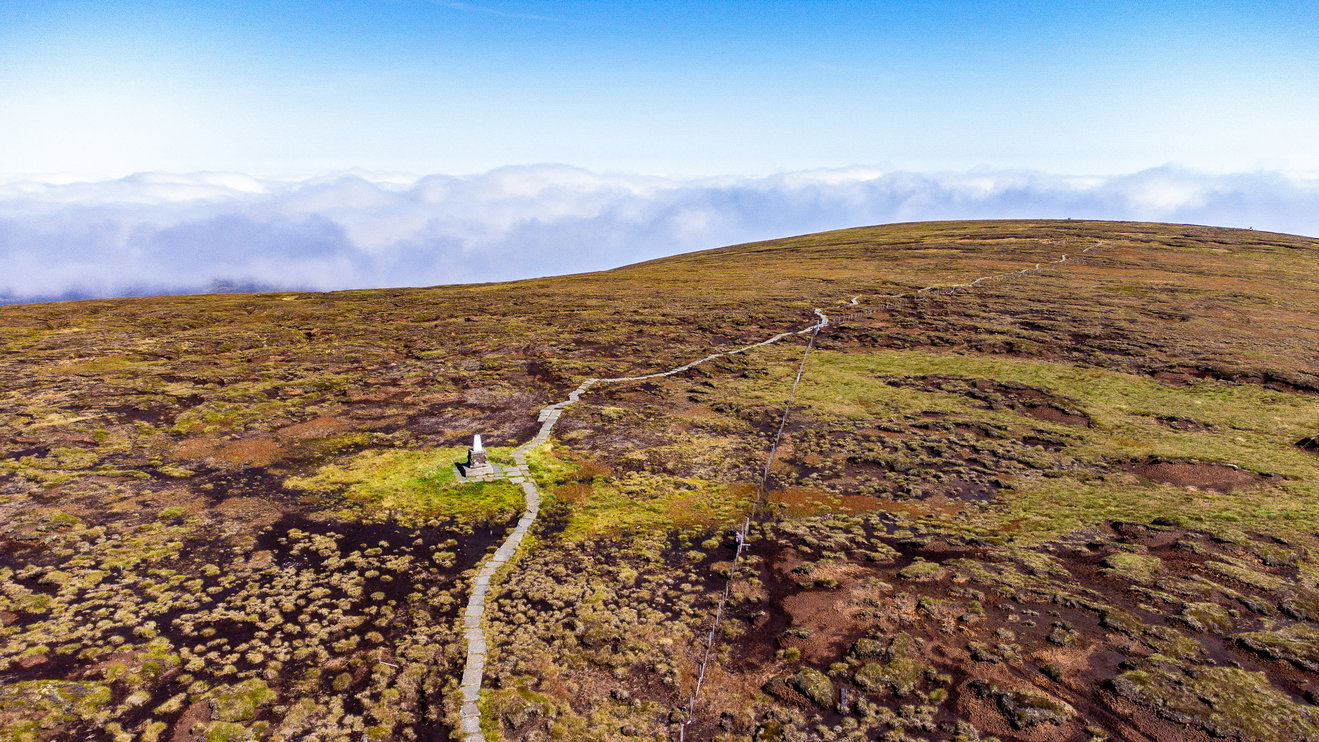
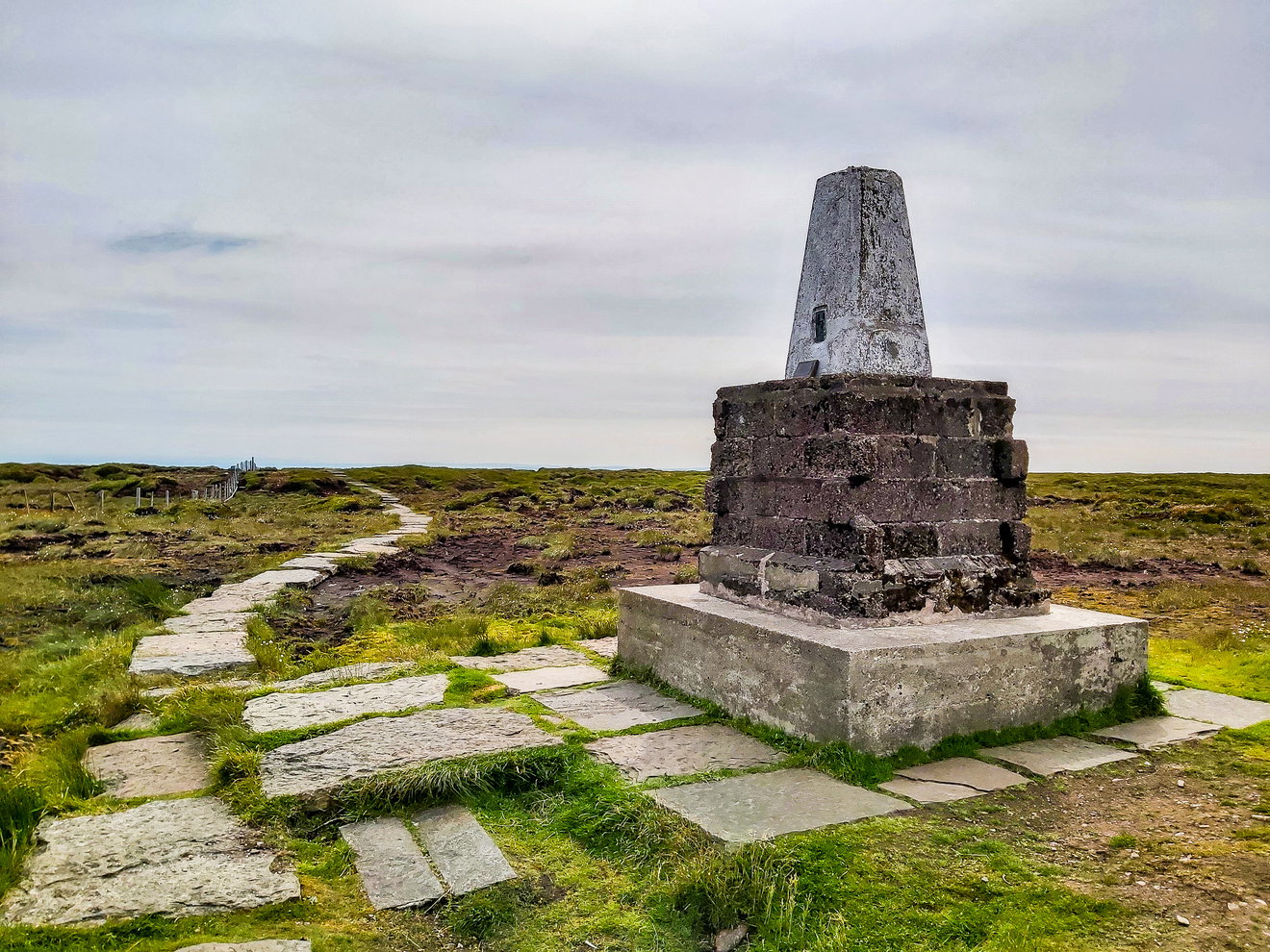
After slogging your way up The Cheviot, eventually the gradient eases, the ground flattens out and something rather unexpected appears beneath your boots.
A pavement.
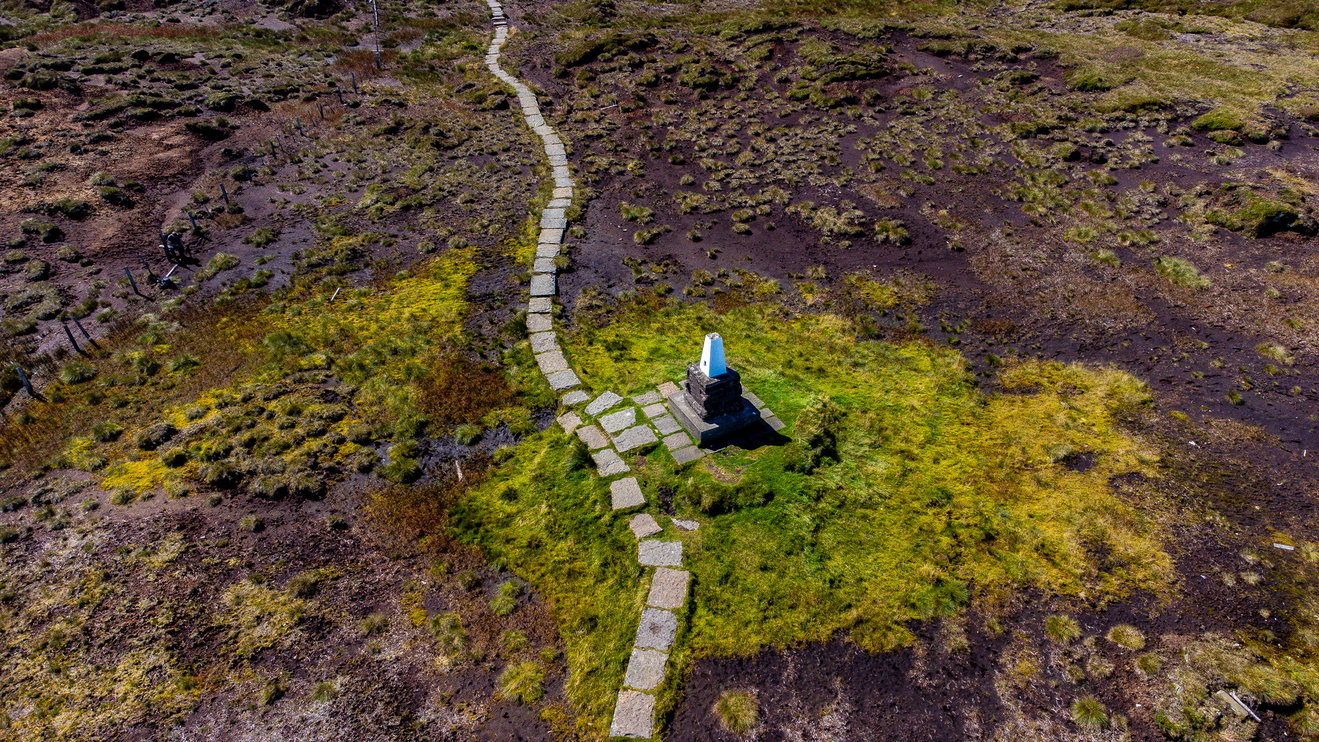
They're also not concrete.
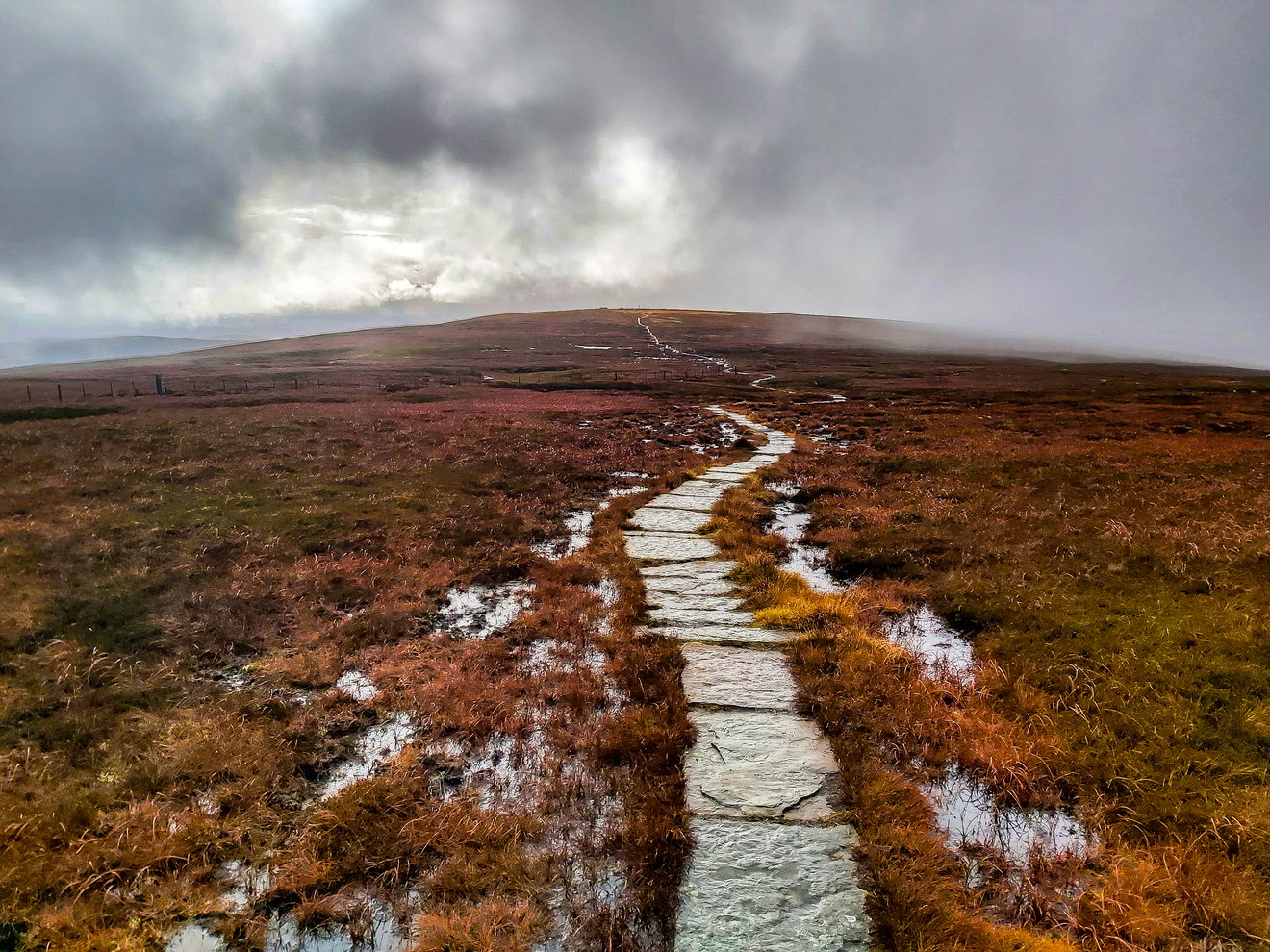
The slabs are stone flags, and without them your final approach to The Cheviot would be a very different experience. Beneath and around that suspiciously civilised-looking pavement is a landscape of deep peat, bog and water which has spent a very long time making life difficult for anyone trying to walk across it.
Unfortunately, the more people who came to walk The Cheviot, the worse the problem became.
The problem with putting thousands of boots through a bog
The broad summit of The Cheviot is covered in blanket peat. Healthy peatland supports vegetation that protects the peat underneath, but repeatedly send walkers across the same bit of wet ground and things start to deteriorate.
Boots damage and remove the vegetation, exposing the peat beneath. Once that happens, rain, flowing water and wind can continue the job. The path becomes muddy, walkers naturally step around the worst bits and the damaged area gets wider.
Eventually what started as a narrow walking line can become a broad scar across the landscape.
Historical descriptions suggest the top of The Cheviot was once particularly grim. Walkers had to negotiate peat hags and very wet ground, and studies of the hill have documented substantial erosion caused by a combination of foot traffic and the weather.
The solution was essentially to give everyone's boots somewhere else to go. Put down a durable path, walkers naturally stay on it and the fragile ground alongside gets a chance to recover.
Which brings us back to our mountain pavement.
Why enormous stone slabs?
At first glance, dropping bloody great paving stones onto a peat bog might seem a fairly unsubtle approach to conservation, but there's clever thinking behind it.
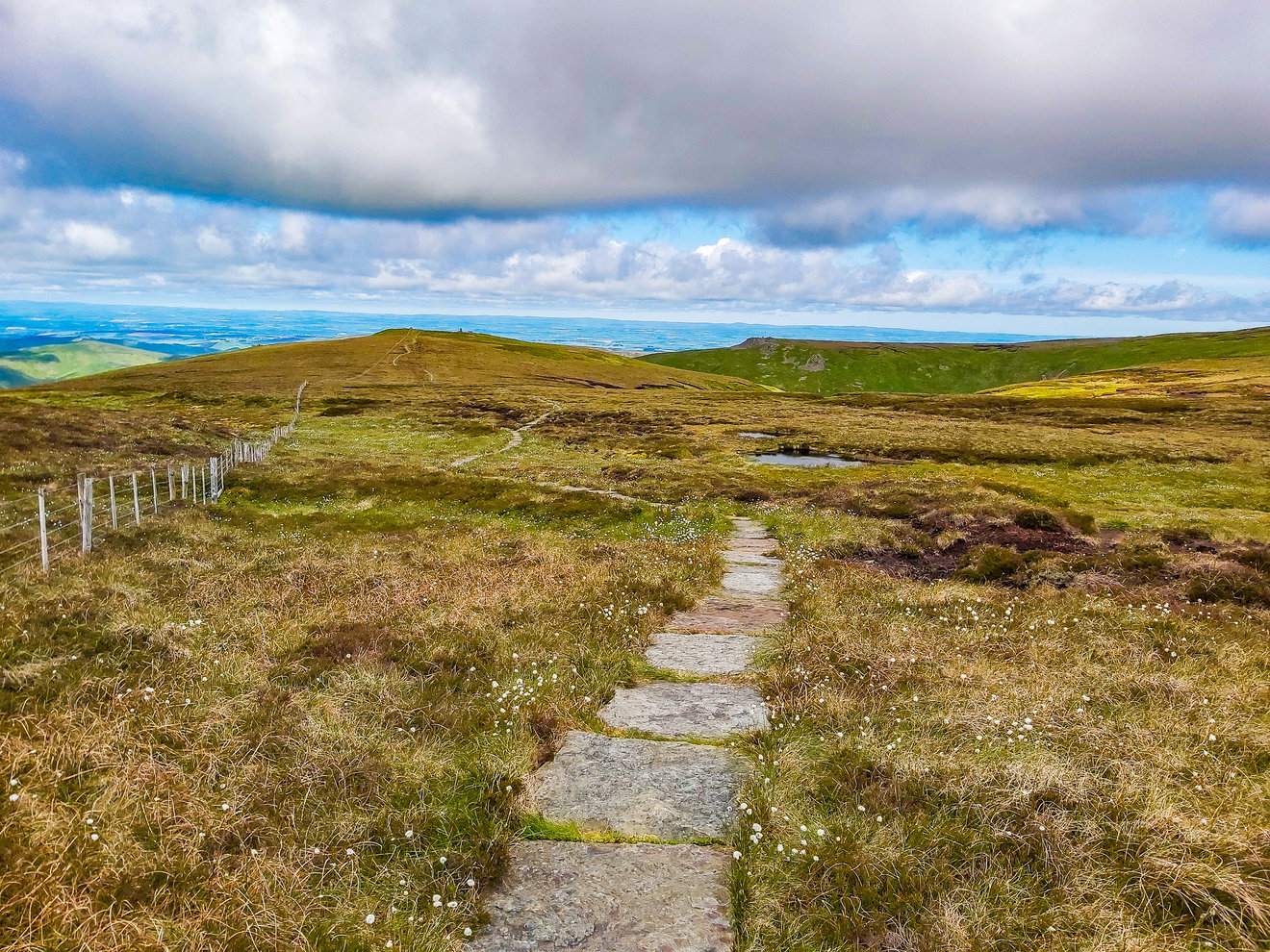
Large stone flags spread the weight over a much bigger area than individual footsteps. Rather than requiring a conventional path foundation dug deep into the ground, the flags can effectively **float on the peat**.
More importantly, they concentrate walkers onto one narrow route.
Natural England's upland management guidance specifically describes stone flags being used over peat in the Cheviot Hills. Once the surrounding bare peat begins to recover, vegetation can grow back around the edges and even into the joints between the stones, helping the path settle into the landscape.
They're therefore doing two jobs at once. They give us something solid to walk on while giving the bog underneath and alongside us a fighting chance.
Anyone who has stepped off the paving on a particularly wet day will probably also appreciate the first of those jobs rather quickly.
Did they really come from old mills?
This is where things get interesting.
One story you'll often hear about the paving on upland paths is that the slabs once formed the floors of old textile mills.
And unlike many suspiciously convenient walking tales, there's truth behind this one.
When major repairs to the Pennine Way began using stone paving in the early 1990s, large quantities of reclaimed sandstone flags were taken from derelict mills in the West Pennines. Rather than being broken up as waste, the slabs were removed and reused on badly eroded sections of the National Trail.
Some were even laid upside down, with their rougher former undersides facing upwards to give walking boots better grip.
Getting several hundred kilograms of old mill floor onto a remote moor obviously presents another small logistical issue.
Many of the flags used on remote sections of the Pennine Way were packed into crates and carried onto the hills by helicopter.
So the idea of old industrial flooring being given a second career halfway up a mountain isn't folklore. It genuinely happened as part of the restoration of the Pennine Way.
There are walking accounts specifically describing the flags on the approach to The Cheviot as reclaimed mill stone too. What I haven't found is an authoritative record confirming the origin of every slab on The Cheviot itself, so it would be stretching things to claim that the entire pavement definitely once had mill workers wandering across it.
Still, there's a fair chance some of the stone beneath your boots has had a considerably more interesting working life than most paving.
The peat is still the important bit
The paving hasn't magically solved every problem on The Cheviot.
The summit peatland itself has needed substantial restoration work in recent years. Over three years, Northumberland National Park worked on badly eroded areas of the summit plateau, reshaping exposed peat hags and introducing native plants including heather, cotton-grass and sphagnum moss.
And because popping back to the van for another tray of plants isn't particularly convenient when you're working on top of The Cheviot, some of the vegetation and equipment had to be flown up by helicopter.
The reason for going to all this trouble extends well beyond stopping walkers getting muddy boots.
Peatlands store enormous amounts of carbon. When peat becomes damaged, dries out and erodes, some of that stored carbon can be released. Healthy peat also holds water and supports specialist upland plants and wildlife.
So protecting that rather bleak-looking brown stuff around the summit is considerably more important than its appearance might suggest.
Probably best to stay on the pavement then
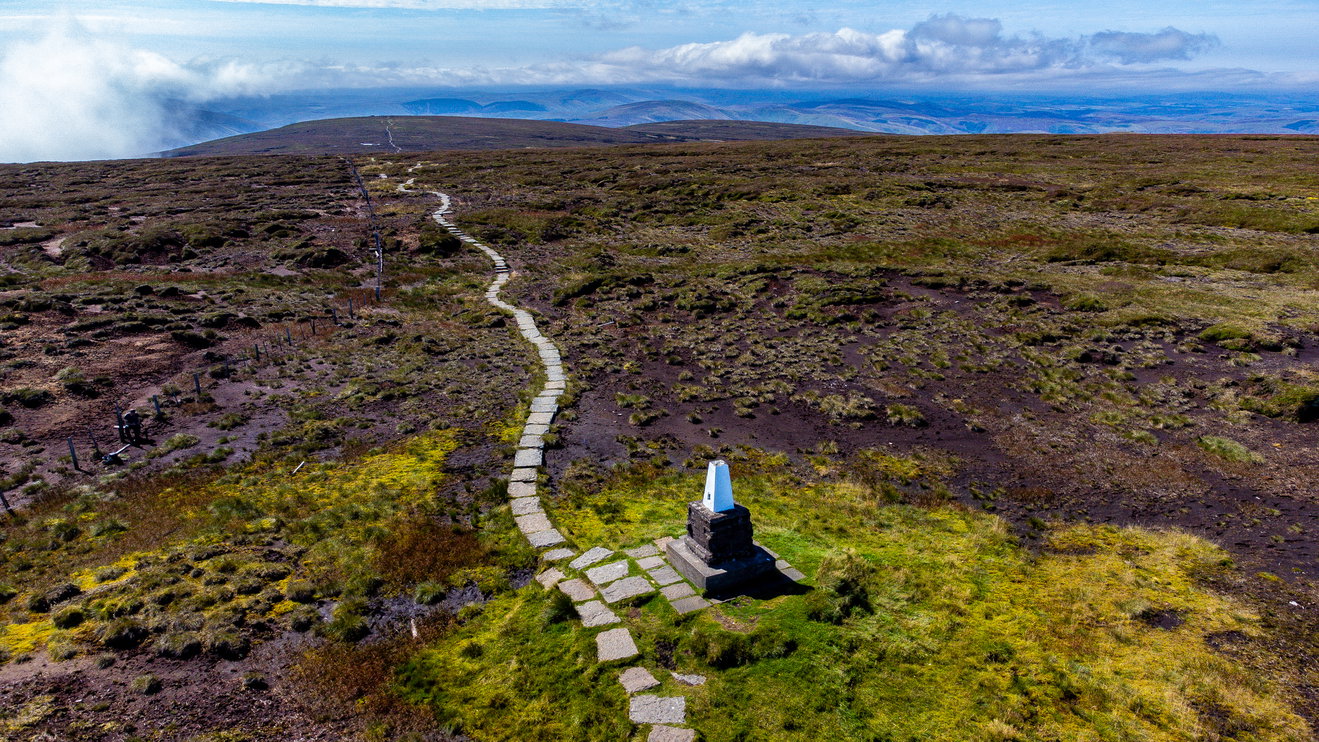
The next time you're approaching The Cheviot trig point and wondering why someone has apparently installed a patio across Northumberland's highest hill, have a look at the ground on either side.
That's really what the paving is there for.
Without a hard route, thousands of pairs of boots would continue trampling through a very wet and vulnerable landscape. The stone takes the punishment instead, while the peat around it has a chance to remain covered in vegetation and recover where it has previously been damaged.
It also means you can cross one of the boggiest parts of the Cheviots without discovering exactly how far your leg can disappear into peat. Or worse! Just Google "Vicar of Dibley puddle!!"
So while a pavement might initially seem completely out of place on top of a mountain, up here it makes perfect sense.
And whatever you do, don't step off it just to see how boggy it really is. Someone else has already done the research for you.