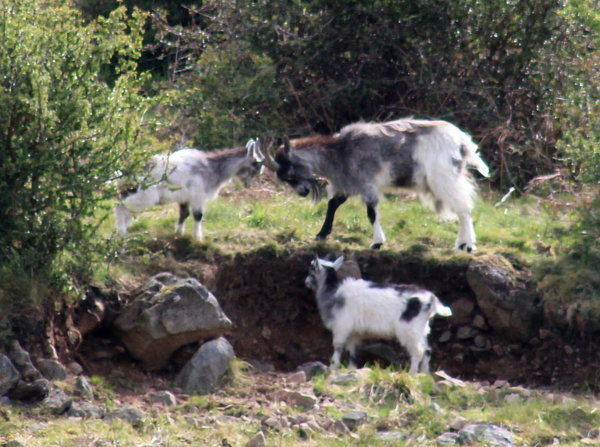
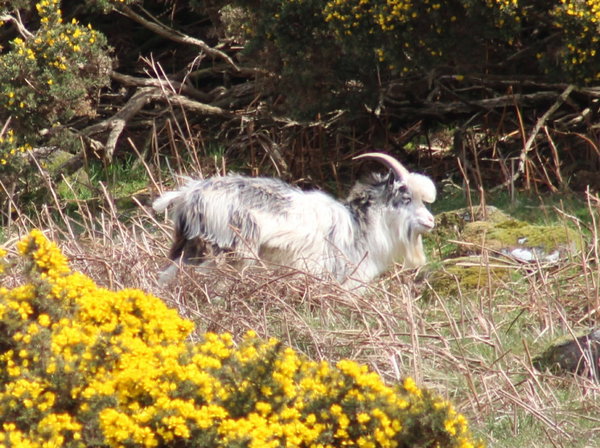
If you're wandering around the College Valley and spot something shaggy staring at you from halfway up a hillside, there's a reasonable chance you haven't discovered a particularly dishevelled sheep. You've found one of the Cheviots' wild goats.
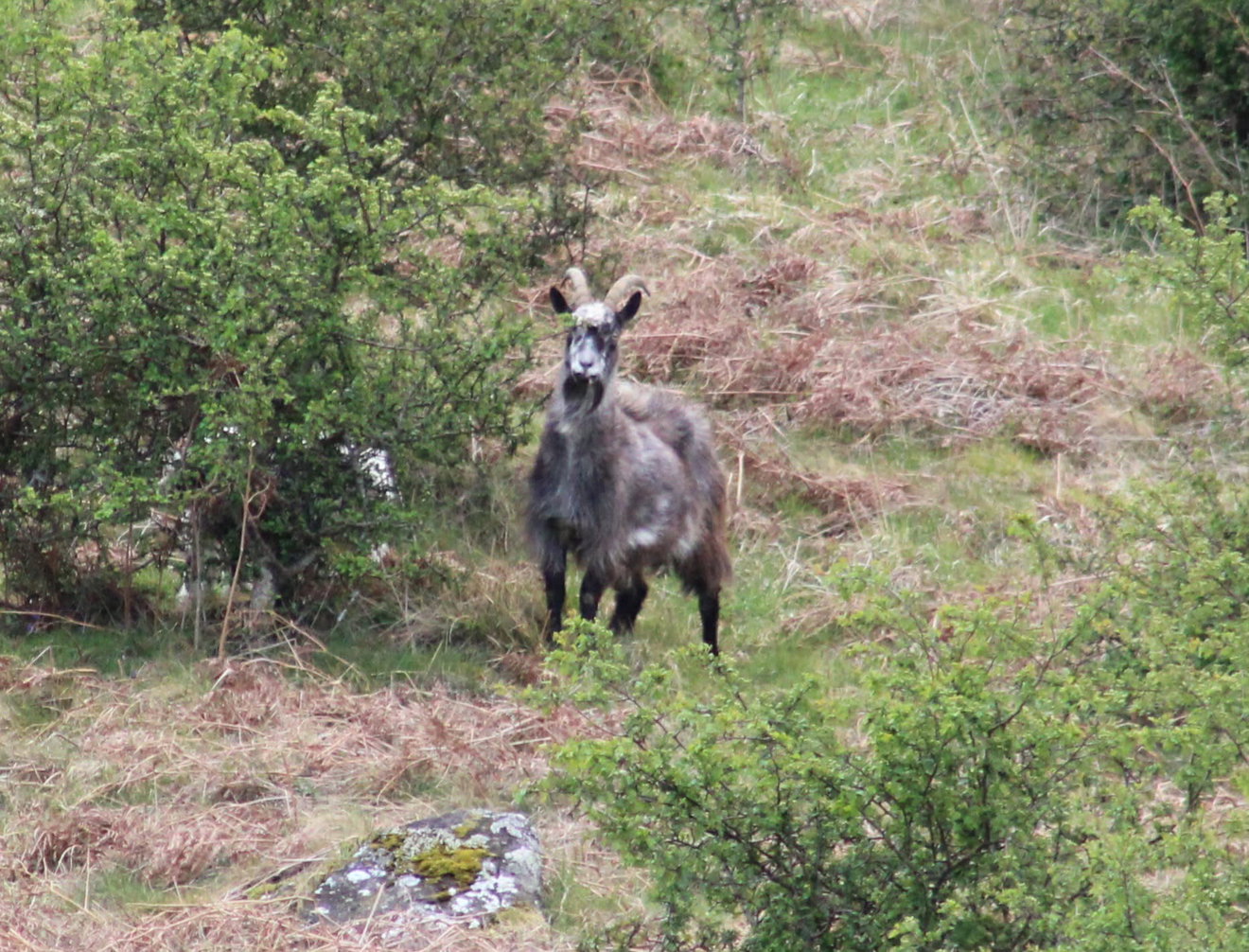
They're quite hard to mistake once you've seen one, with shaggy coats, enormous curved horns and the general appearance of something that's been living outdoors for a very long time and has absolutely no intention of coming inside. Which, as it turns out, isn't far from the truth.
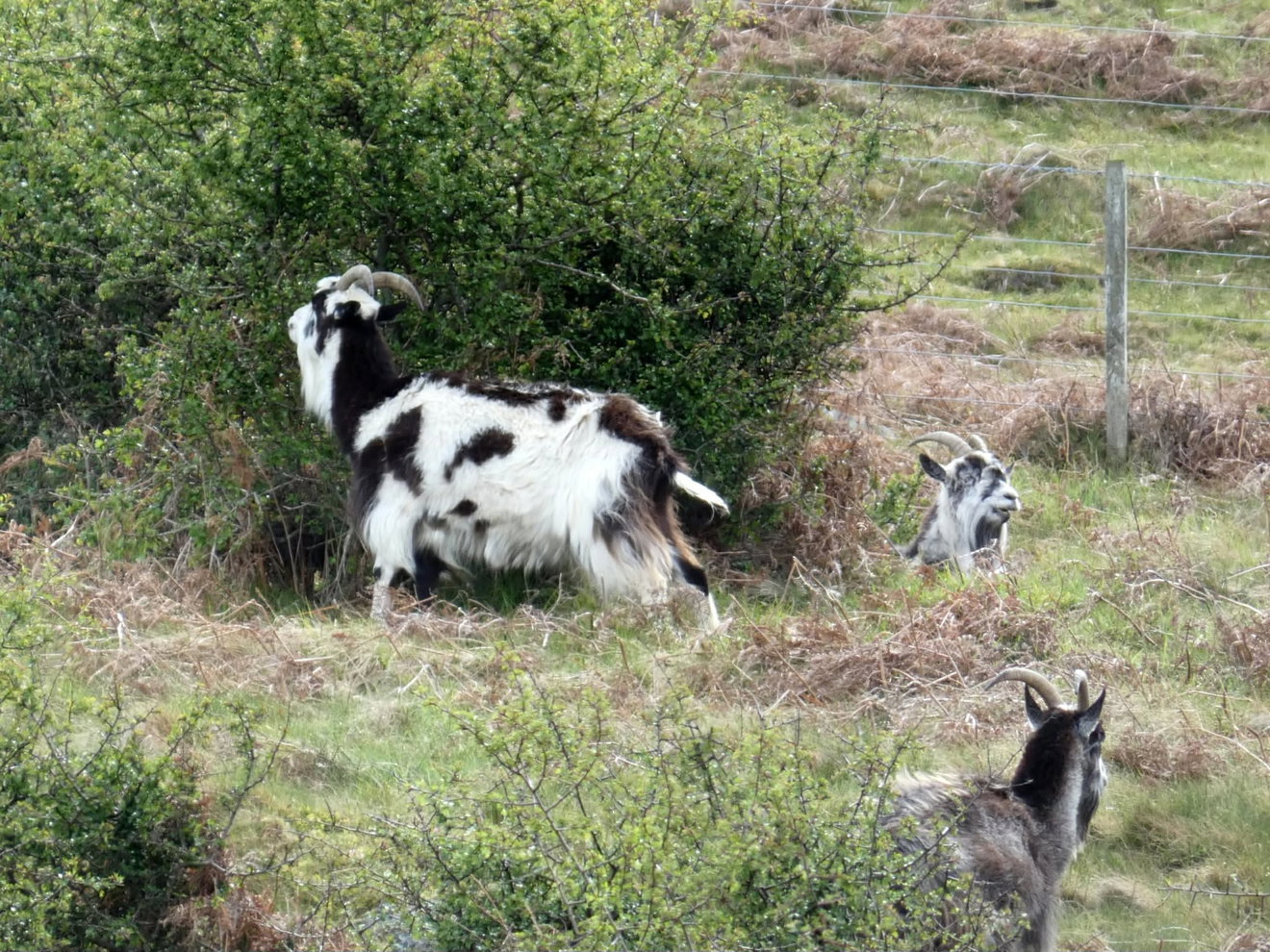
The wild goats around College Valley, Newton Tors and Yeavering Bell belong to an isolated population of British Primitive Goats. Their documented history in the area stretches back to at least 1860, but the type of goat they represent has much deeper roots in Britain.
Goats aren't native to these islands. Their ancestors arrived as domestic livestock with Britain's early farming communities thousands of years ago. Long before today's specialist dairy and meat breeds appeared, primitive goats provided people with milk, meat, skins, hair and tallow. Somehow, a little population of them is still wandering around the Cheviots.
So how did they get here?
This is where fact starts rubbing shoulders with folklore.
One local story says the goats arrived courtesy of the monks of Lindisfarne. As Viking raids made life on Holy Island increasingly uncomfortable, the monks eventually headed inland, supposedly bringing their livestock with them. According to the tale, some of the goats were released or abandoned in the Cheviots and their descendants have been roaming the hills ever since.
It's a cracking story, but there's no evidence proving that's what happened. What we can say with considerably more confidence is that goats have been associated with this landscape for a very long time and the College Valley herd has existed in the wild for at least the last century and a half.
For years, exactly what these goats were remained partly a matter of history, appearance and educated assumption. Then, in 2026, someone finally checked their DNA.
It turns out they really are different
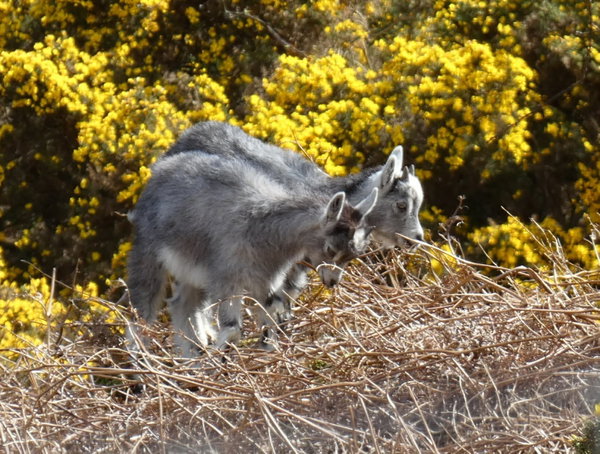
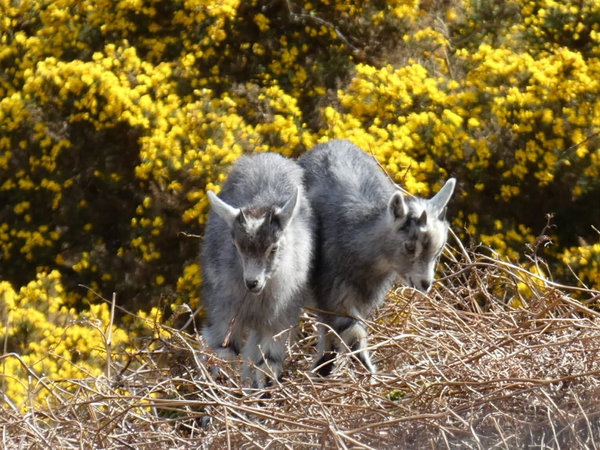
Researchers led by Newcastle University published the first genetic study to investigate the ancestry and genetic health of a feral goat population in Britain, and the Cheviot goats turned out to be rather special.
The researchers found that the College Valley population was genetically distinct from the other European goat breeds used for comparison. When compared against a much larger international dataset, their closest relatives were Irish goat breeds. More remarkably, the analysis found no evidence that the population had crossbred with other goat breeds.
The researchers concluded that the Cheviot population represents an isolated remnant of the British Primitive Goat. So while generations of farmers elsewhere were selectively breeding goats to produce more milk, meat and other useful things, these lot appear to have largely avoided the entire process by buggering off into the Cheviots.
There is unfortunately a downside to keeping yourself to yourself for that long. The same research found very low genetic diversity and high levels of inbreeding. A small population, historical culling and long-term isolation have all left their mark, and the College Valley population is now recognised as both a rare breed and a Native Breed at Risk.
The hill of the goats
Their connection with this particular landscape gets even more interesting when you head towards Yeavering.
The name Yeavering derives from the old name Gefrin, associated with the Welsh *gafr*, meaning goat, and Yeavering Bell is consequently often described as the **Hill of the Goats**. It's quite a hill to have your name attached to as well. Sitting on top are the remains of the largest Iron Age hillfort in the region, with the platforms of more than a hundred timber roundhouses still visible inside its collapsed stone ramparts.
Down below Yeavering Bell once stood Ad Gefrin, the great seventh-century royal centre associated with King Edwin of Northumbria. Archaeologists excavating there found one particularly strange burial containing a ceremonial staff and the skull of a goat.
Quite what the goat was doing there, or what it meant to the people who buried it, isn't something we can now know for certain. It certainly doesn't prove that the goats wandering Yeavering Bell today are direct descendants of goats that watched King Edwin wandering around below, tempting though that story would be. It does, however, add another chapter to a remarkably long association between goats, people and this little corner of the Cheviots.
Where can you see them?
The College Valley is probably your best bet. The goats roam around the valley, Newton Tors and Yeavering Bell, so there's unfortunately no goat reception desk where you can turn up at eleven and collect your allotted sighting. They're wild animals and they'll be wherever they've decided to be.
The National Park even has a wild goat walk around Hethpool, with St Cuthbert's Way providing a good vantage point for spotting them, although sightings obviously aren't guaranteed.
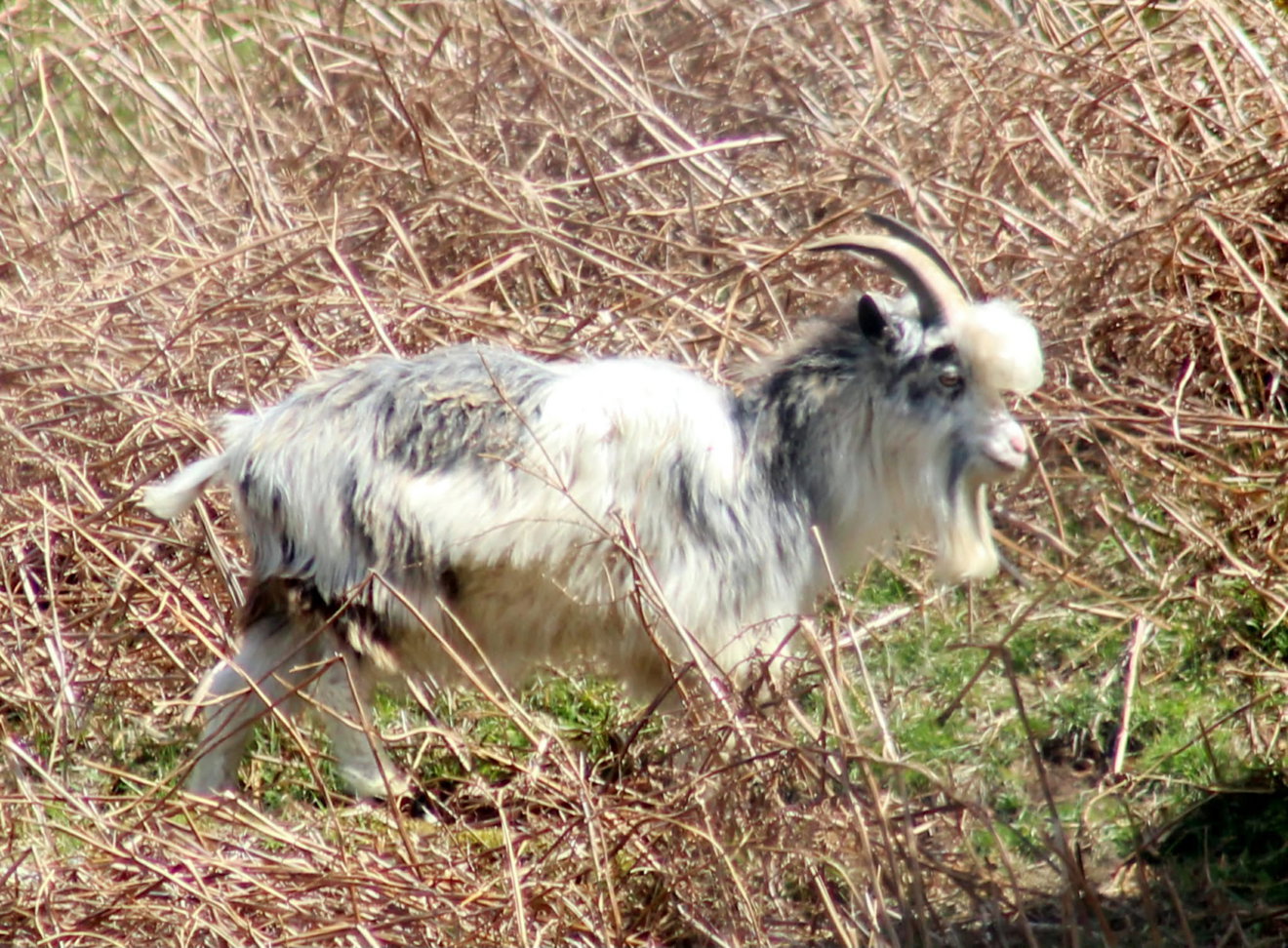
If you do find them, they're usually fairly easy to recognise. Their shaggy coats vary through black, white and brown, while the males can carry some seriously impressive horns, sometimes around half a metre long. They're considered no threat to walkers if they're left undisturbed, although I'd suggest the enormous horns already communicate the **leave me alone** message reasonably effectively.
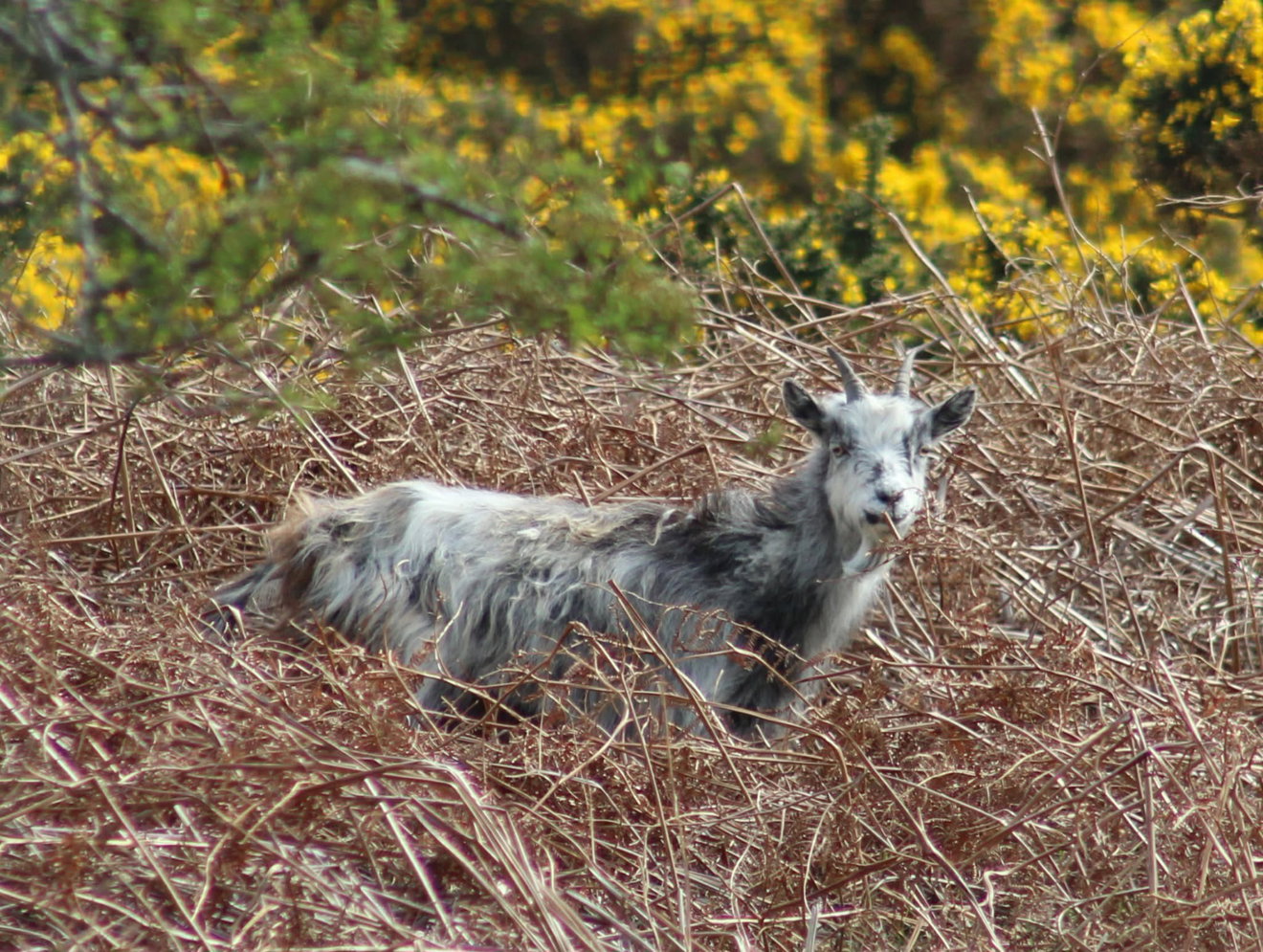
Most of the year they live in small family groups, with larger gatherings during the autumn rut, while kids begin appearing from around mid-February. There's something worth knowing if you happen across a youngster on its own too. Females sometimes leave newborn kids tucked away somewhere sheltered while they wander off to graze, so don't assume you've been selected by nature to become its new dad. Leave it where it is and mum should be back.
Worth keeping an eye out for
Of course, you can spend a day wandering around College Valley and not see a single goat. That's wildlife for you, although being left with the College Valley, Hethpool Linn, Yeavering Bell and the surrounding Cheviot Hills isn't exactly a disastrous consolation prize.
If one of those shaggy heads does suddenly appear above the heather though, stop and have a proper look. You're looking at a small surviving piece of Britain's farming history that, against the odds, is still wandering around the Cheviots on its own terms.
Photography: Sandra And Andrew