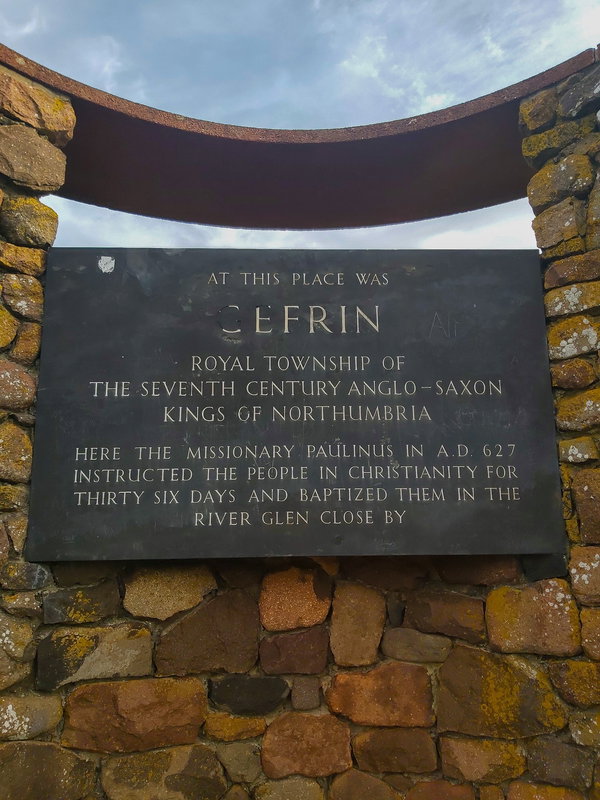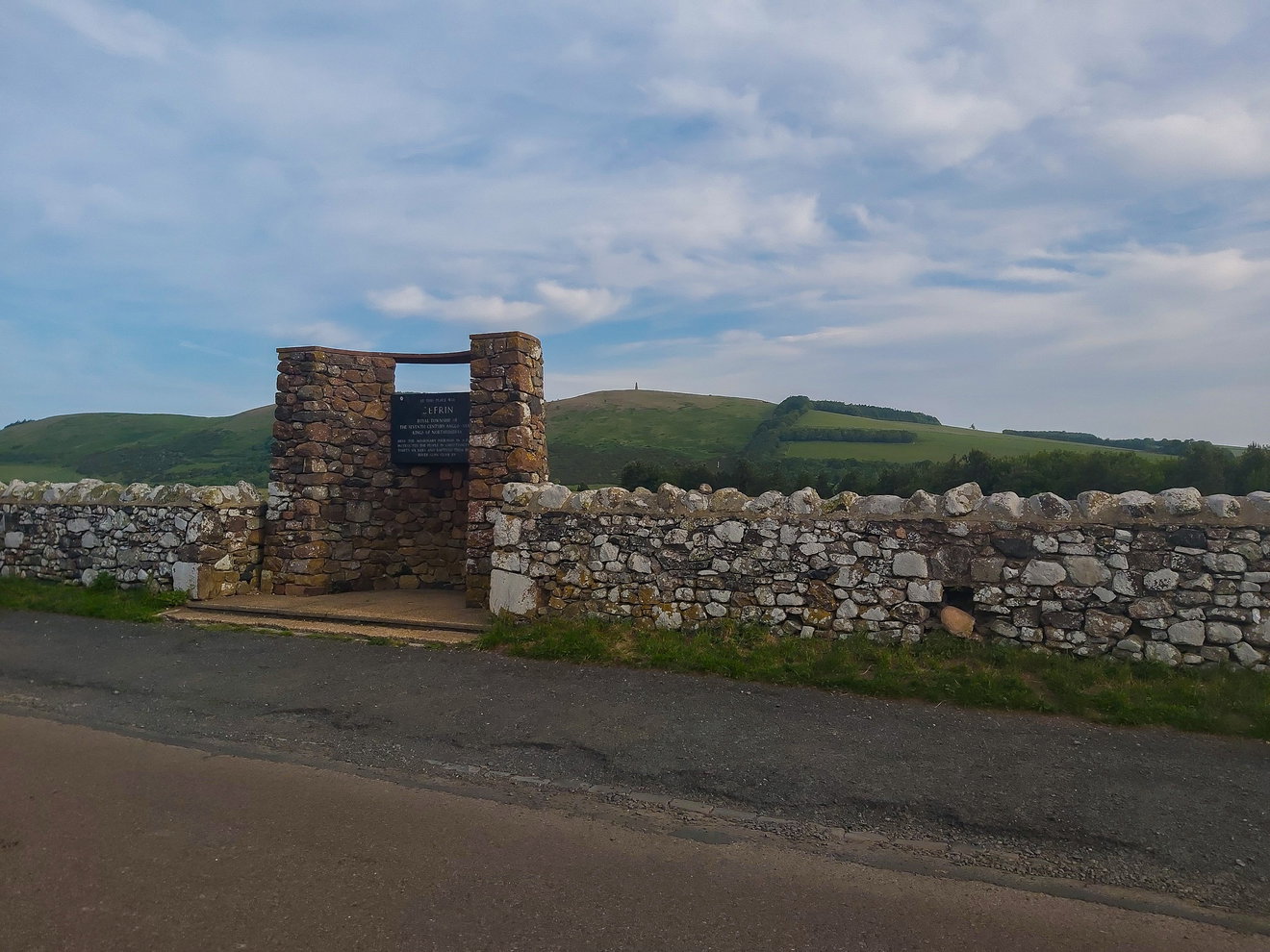
Named after the Brittonic words for Goat (Gevr) and Hill (Brinn), the site of Gefrin (Hill of the Goats), was the location for a 7th century royal palace of Northumbrian Kings and is considered one of the most significant archaeological sites in Northern Europe.
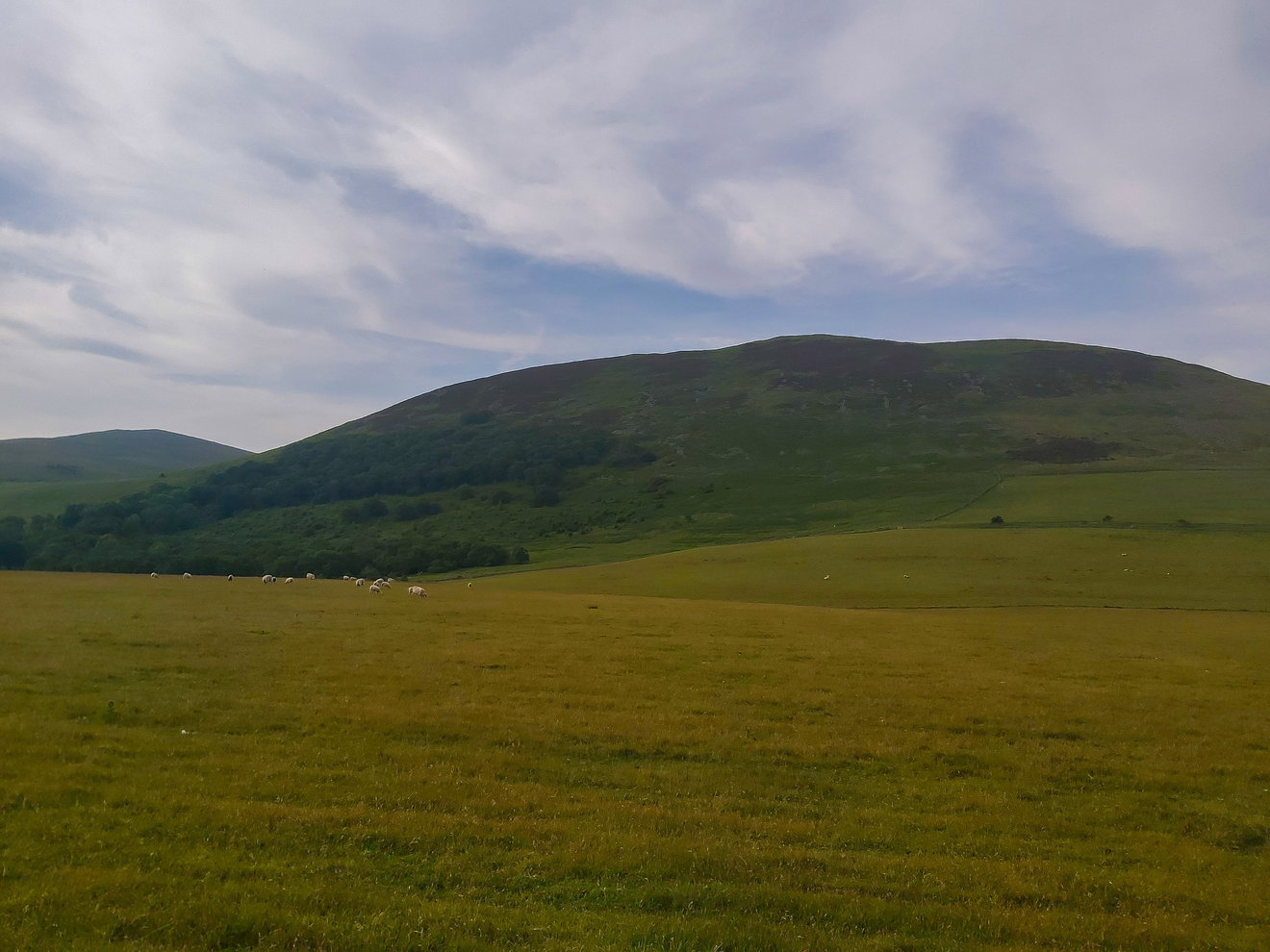
Gefrin is sited at the foot of Yeavering Bell (itself a derivation of Gevr Brinn), the twin peaked hill fort in the Cheviot Hills. It was a site that was lost for over 1000 years, as it appeared to be a series of flat fields, which was only discovered due to a very dry summer during 1949. Dr Kenneth St Joseph obtained some aerial photos of the site during that parched year and those photos revealed a series of “cropmarks” that suggested buildings had previously occupied the area.
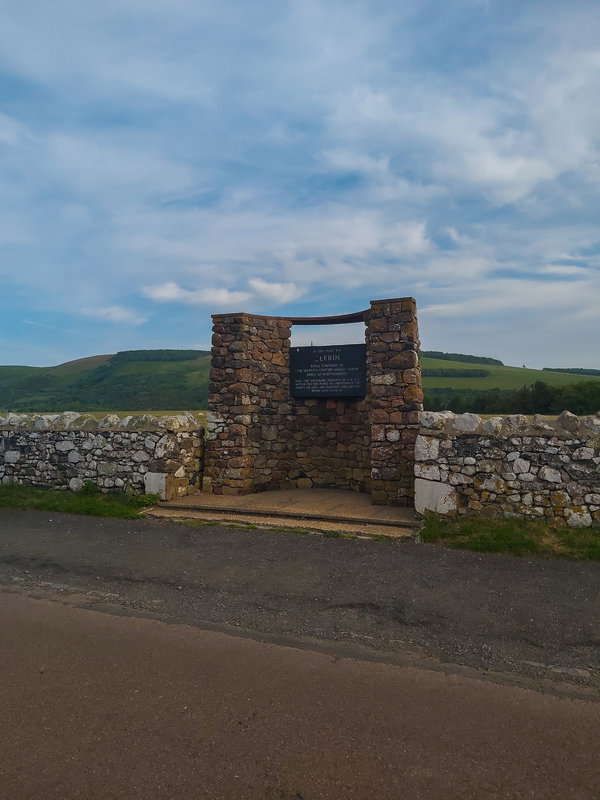
The archaeologist Brian Hope-Taylor began a series of excavations on the site that started in 1953 and ended in 1962. His landmark work revealed an incredibly sophisticated complex of high-status Great Halls up to 25m in length, a timber, tiered “theatre” for public assemblies, and an enclosure for cattle which set Gefrin apart from other medieval sites.
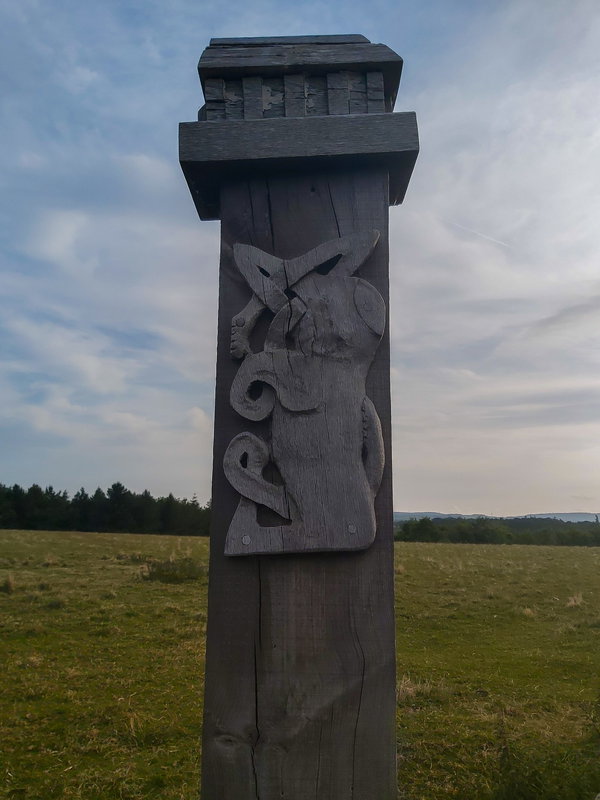
At the time Gefrin was occupied, Northumbria was one of the most powerful Kingdoms in the British Isles, stretching from the River Humber in the south to the Firth of Forth in the north. It is thought to have been a summer residence for the Kings of Bernicia, and later Northumbria, such as King Edwin, King Oswald and King Oswiu.
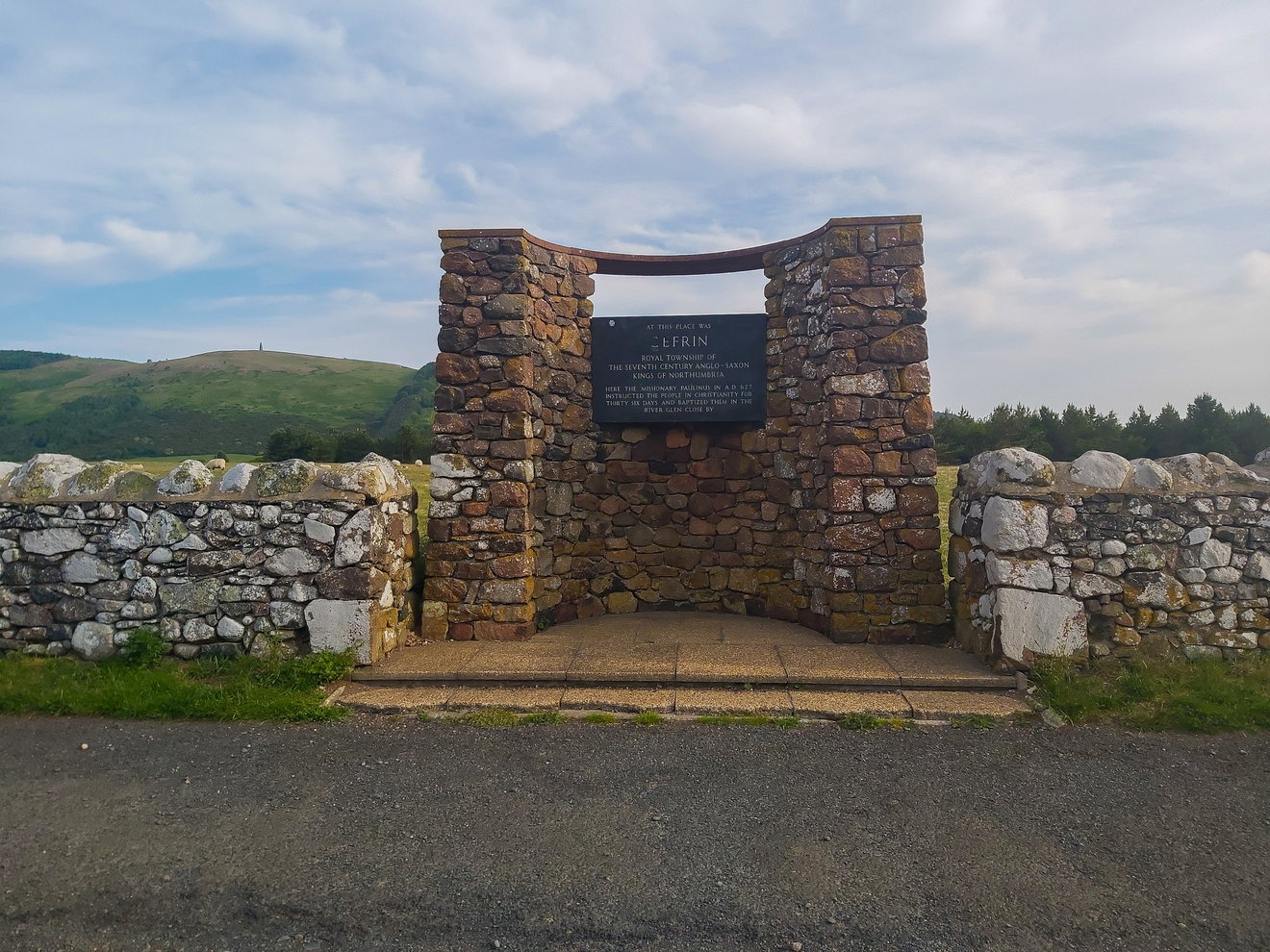
It was written about by The Venerable Bede in his document “Ecclesiastical History of the English People” dating from AD731. In it he records that King Edwin and Queen Æthelburh stayed at Gefrin with Paulinus who was a Roman missionary. Paulinus spent 36 days at Gefrin in AD627, spending his time "preaching and baptising" locals in the River Glen. It is considered to be a pivotal point in the transition to Christianity in the north of England.
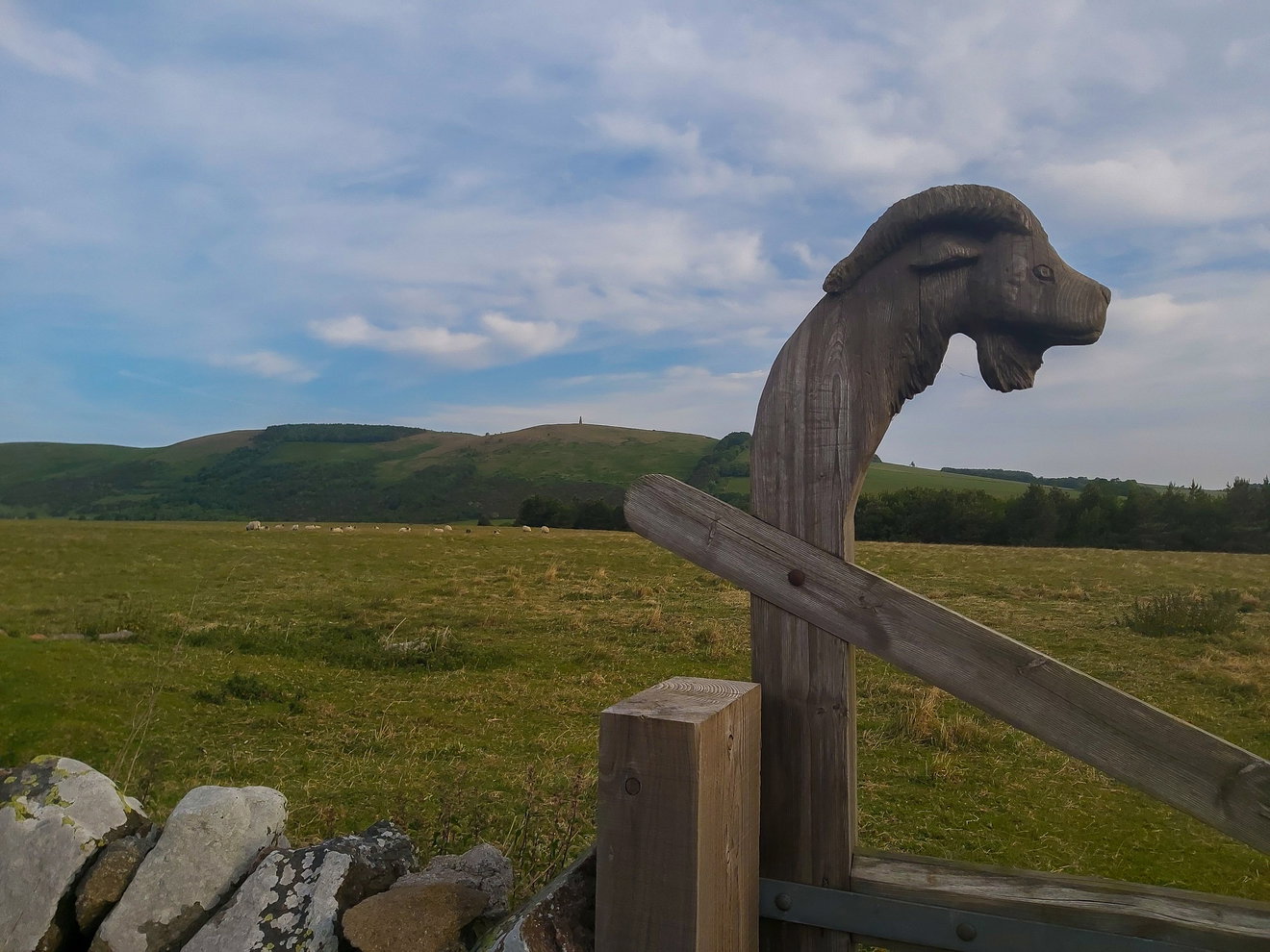
Many people would have visited Gefrin and the artifacts found there suggest they came from far and wide such as Europe, Scandinavia and North Africa, and while there isn't a great deal to see of the former palace now it has been covered back over, it is still fascinating to visit and wonder how somewhere seemingly so remote, became a cosmopolitan hub. If you are visiting Wooler, you can visit Ad Gefrin which is a distillery and museum dedicated to the site. On display there are many of the items found during the excavations of Brian Hope-Taylor.